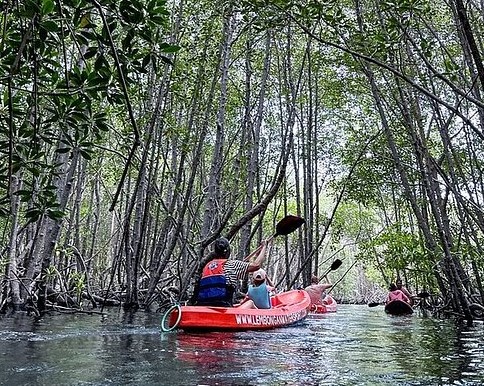
You glide smoothly into a shaded river bend, your paddle cutting cleanly into water so clear you can see smooth river stones mapping the bottom ten feet below. The frantic ringing of your office phone is replaced by the rhythmic drumming of a woodpecker, and your constant email notifications vanish because your cellular signal dropped out two miles back at the boat launch. Just as you finally relax, the distant, unmistakable low rumble of rushing water echoes down the canyon—and your stomach drops as you realize you don’t know how to navigate the upcoming bend.
Over my ten years of scouting the world’s most pristine waterways, I have paddled into that exact mix of deep serenity and sudden adrenaline more times than I can count. Many travelers assume that running a river requires either extreme, death-defying whitewater athleticism or a mind-numbing drift on a crowded commercial tourist raft.
What they miss is the sweet spot in the middle: river kayaking escapes that focus on flatwater touring, gentle Class I-II currents, and profound wilderness immersion.
For beginners looking to take their first solo strokes and intermediates eager to master multi-day river journeys, transitioning from calm lakes to moving water is a major milestone. Let’s look past the generic outdoor manuals and dive deep into the real-world physics, safety logistics, and gear choices you need to conquer your first true river escape.
The Hydrodynamics of Flow: Understanding River Mechanics
To understand how to navigate a river safely, think of the current like a giant, liquid conveyor belt inside a busy airport warehouse. If you try to run directly against the movement of the belt, you will exhaust yourself instantly.
However, if you learn how the different lanes of the conveyor belt switch directions, merge, and slow down, you can use the river’s own kinetic energy to steer your kayak with almost zero physical effort.
Reading the Water: The Downstream V and Eddies
When looking downstream from your kayak seat, your first technical job is finding the Downstream V. When water squeezes between two submerged boulders, it creates a smooth, dark, wedge-shaped channel pointing down the river. This is your highway green light; it marks the deepest, safest route through any minor rapid.
Conversely, you must learn to look for eddies. An eddy is a circular swirl of water that forms directly behind an obstruction, like a massive rock or a fallen log, where the water actually flows upstream.
+-------------------+-----------------------------------+-----------------------------------+
| Hydro Feature     | What It Looks Like                | Tactical Use for Paddlers         |
+-------------------+-----------------------------------+-----------------------------------+
| Downstream V      | Smooth, dark, downward-pointing   | Safe passage highway; deepest     |
|                   | wedge on the water surface        | channel through obstacles         |
+-------------------+-----------------------------------+-----------------------------------+
| River Eddy        | Swirling pool flowing upstream    | Safe parking zone; pull in to     |
|                   | behind a large rock or bend       | rest, hydrate, or check maps      |
+-------------------+-----------------------------------+-----------------------------------+
| Hydraulic Jump    | Foamy, stationary breaking wave   | Avoid; can trap a kayak hull in   |
| (Hole)            | on the downstream side of a rock  | a continuous backward spin        |
+-------------------+-----------------------------------+-----------------------------------+
Entering an eddy is like pulling your car into a highway rest stop. It gives you a safe, stationary pocket where you can pause, take a drink of water, check your GPS, and plan your next move.
Epic River Kayaking Escapes Built for Pure Rejuvenation
While rivers snake across every continent, certain river corridors are uniquely engineered by nature to offer beginner and intermediate paddlers flawless safety infrastructure alongside breathtaking wilderness views.
1. The Dordogne River, France (The Historical Flatwater Drift)
The Dordogne is the ultimate proving ground for complete beginners seeking elegant river kayaking escapes. Flowing past dramatic limestone cliffs, medieval castles, and ancient vineyards, this river features a gentle, predictable current with almost no technical rapids during the summer months.
-
The Technical Highlight: The river infrastructure here relies on excellent linear portage access. This means you can drop your kayak in at one village and drift continuously down-river for days, stopping at riverside campgrounds or boutique stone guesthouses without ever needing to paddle hard upstream against the main current.
2. The Soca River, Slovenia (The Intermediate Emerald Highway)
If you are an intermediate paddler looking to test your edge-control skills, the Soca River in the Julian Alps is an absolute bucket-list sanctuary. Known for its surreal, neon-emerald water, the upper sections offer pristine Class I-II touring runs wrapped in dense, alpine pine forests.
-
The Technical Highlight: The Soca features classic pool-drop hydrology. An exhilarating, fast-moving section of ripples is always followed by a long, deep, perfectly calm pool of slow-moving water. This layout gives unconditioned muscles plenty of time to rest, reset their posture, and recover before entering the next playful stretch of current.
Gear Integration: Outfitting for Moving Water
When you trade stable lakes for active rivers, your equipment requirements change completely. A lake kayak is designed to track straight in a line; a river kayak must be highly maneuverable.
1. Choosing the Right Hull: Sit-On-Top vs. Touring Kayaks
For beginners embarking on short summer river kayaking escapes, a molded sit-on-top kayak is an exceptionally safe choice. If you flip over, you simply slide off into the water without getting trapped inside a closed cockpit, and the boat features self-bailing scupper holes that drain water automatically.
For intermediates tackling multi-day wilderness expeditions, transition to a 12-to-14 foot crossover kayak equipped with a drop-down skeg (a small retractable fin) and watertight dual bulkhead compartments to store your camping dry bags securely.
2. The Redundant Dry Bag Protocol
Never trust a kayak’s storage hatches to stay 100% waterproof during a long day on the river. If your hull scrapes a submerged rock or takes on heavy splash-water, moisture will seep into your gear.
The Expert Packing Method: Implement the double-bagging matrix. Pack your sleeping bag and dry clothes into small, lightweight 10-liter dry sacks first. Then, place those smaller sacks inside a heavy-duty, 50-liter PVC roll-top dry bag. Secure this main bag directly to the internal tracking loops of your kayak using lockable cam straps—never use stretchy bungee cords, which can slip out of place if the boat capsizes in a moving current.
     💡 PRO-TIP FOR EFFECTIVE PADDLING:
     Most beginners make the mistake of paddling entirely with their arms, leading to
     burning shoulders and exhaustion within the first two miles. To paddle efficiently
     on a long river escape, engage your core muscles through "torso rotation." Keep your
     arms relatively straight, plant the paddle blade fully into the water near your toes,
     and twist your entire midsection backward to pull the boat forward. Your core muscles
     are vastly stronger than your biceps, allowing you to paddle all day without fatigue.
Hidden Warnings: Recognizing the Invisible Risks of Moving Water
The Hazard of the “Strainer” Trap
To an untrained beginner, a beautiful fallen tree dipping its branches gently into a slow river current looks like a scenic, shaded spot to park and take a photograph. To a river professional, this is a strainer—the single most dangerous natural hazard on any waterway.
     ⚠️ THE HIDDEN WARNING: THE STRAINER PHENOMENON
     Just like a colander in your kitchen sink, a strainer allows the liquid river current
     to pass through its branches effortlessly but completely traps solid objects—like
     your kayak or your body—underneath the surface. The immense pressure of the moving
     water will pin your boat against the logs, making exit physically impossible without
     rescue assistance. Always maintain a minimum safety distance of two boat-lengths away
     from any downed trees, low-hanging branches, or river debris.
Managing the Shadow of Foot Entrapment
If your kayak ever capsizes in a moving river current, your natural human instinct is to immediately stand up to check your depth. Do not do this. If the riverbed is rocky, your foot can easily get wedged into a tight underwater crevice.
The moving current will then push your upper body forward down-river, pinning you underwater against your own leg. If you capsize, always assume the Safe Swim Position: float on your back with your feet pointing strictly down-river, keeping your toes up near the surface of the water until you drift into a calm, shallow eddy.
Connect with the Living Current
Embarking on structured river kayaking escapes is a transformational way to experience independent wilderness travel. It places you directly inside the natural highway system of the earth, forcing you to slow your mind down to match the ancient, meditative rhythm of the water. By taking the time to read the visual cues of the current, locking down your safety redundancies, and packing your gear with technical intention, you turn a simple weekend holiday into an empowering journey of self-reliance.
Are you getting ready to rent a kayak for your very first afternoon river drift, or are you currently planning an independent, multi-day wilderness canoe trek? Ask your gear questions or share your favorite river stories in the comments below, and let’s get you out on the water!
