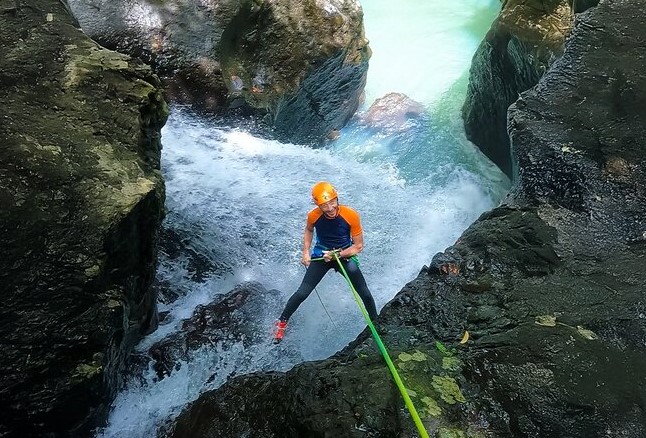
I was hanging suspended by a 12mm dynamic rope, 50 feet above a churning, sapphire-blue river basin in the dense jungles of North Bali. Cold mountain water slammed directly into my helmet, making it almost impossible to see my next foot placement on the slick, moss-covered basalt wall. One minor slip meant an uncontrolled swing into a jagged rock face, but as I locked off my descender and took a deep breath, the sheer adrenaline washed away every ounce of corporate burnout I had carried from home.
For many outdoor enthusiasts, a typical tropical holiday involves ziplining over tree lines or hiking marked volcanic trails. But if you are staring at those standard itineraries and feeling a profound sense of boredom, you are ready for the ultimate upgrade.
Stepping into raw jungle canyon tours—often professionally referred to as canyoneering or canyoneering—is like entering a completely hidden world. It is a vertical playground where roaring waterfalls, hidden slot gorges, and prehistoric flora create an environment that very few humans ever get to see.
If you are a beginner or intermediate adventurer looking to safely transition into this high-octane niche, this deep-dive guide will give you the technical blueprint and confidence to make the leap.
What Exactly Is Canyoning? Demystifying the Vertical Jungle
To the uninitiated, exploring a gorge sounds like a standard day hike with a bit of splashing around. In reality, it is a highly technical multi-sport discipline.
Think of a canyoning expedition like a natural obstacle course designed by Mother Nature over millions of years. To move from the top of the gorge (the drop-in point) to the bottom (the exit point), you cannot simply walk. You must swim through technical currents, slide down naturally polished rock chutes, leap off cliffs into deep pools, and rappel down active waterfalls.
The Mechanics of Progression
In the outdoor guiding world, we classify jungle canyon tours based on how we progress through the system:
-
Horizontal Gorges: These require more swimming, scrambling over massive boulders, and navigating low-angle streams. Perfect for absolute beginners.
-
Vertical Gorges: This is where the real adrenaline lives. You will utilize specialized rigging equipment, anchored ropes, and mechanical descenders to lower yourself down vertical or overhanging rock faces.
Anatomy of the Gorge: Key Microenvironments to Understand
Entering a deep jungle ravine means stepping into a highly specific microclimate. The environment changes drastically the further down you go.
+------------------+----------------------------------+---------------------------------------+
| Gorge Zone       | Environmental Characteristics    | Essential Skill Required              |
+------------------+----------------------------------+---------------------------------------+
| The Upper Rim    | High humidity, dense canopy      | Basic trekking & trail navigation     |
| The Vertical Wall| Slick basalt/limestone, waterfalls| Rope management & rappelling technique|
| The Deep Basin   | Cold water, hydraulic currents   | Defensive swimming & water treading   |
+------------------+----------------------------------+---------------------------------------+
The Choke Points and Slot Canyons
As you descend, look at how the walls compress. When a wide river valley suddenly narrows into a corridor just a few feet wide, you are entering a slot canyon.
The hydraulic pressure of the water increases dramatically here. Understanding how water moves through these natural choke points is essential, as even a mild current can exert immense force against your legs.
The Thermal Paradox
Here is an insider secret that surprises almost every first-timer: jungles are hot, but jungle canyons are incredibly cold. Because the dense overhead canopy blocks out nearly all direct sunlight, the water flowing through these deep volcanic or limestone slots rarely warms up.
Staying submerged in 16°C (60°F) water for four hours while wearing a harness will drain your core body temperature rapidly. This is why proper gear selection is non-negotiable.
Essential Gear: What You Need for Technical Jungle Canyon Tours
When you book a reputable excursion, the guiding outfitter will provide the heavy hardware. However, understanding the technical specifications of what you are putting on your body is paramount for your safety.
-
Neoprene Wetsuits (3mm to 5mm): Do not let a tour operator convince you that a swimsuit is enough. A thick wetsuit provides crucial thermal protection against hypothermia and acts as physical body armor against sharp rock edges.
-
Canyoning Harnesses with a Scuff Guard: Unlike standard rock-climbing harnesses, canyoning harnesses feature a heavy-duty plastic seat protector. This allows you to slide down rock chutes on your rear without tearing through your gear.
-
High-Grip, High-Drainage Footwear: This is the most critical personal investment. You need shoes with specialized rubber soles (like Vibram Megagrip) that can stick to wet, algae-covered stone. The shoes must feature drainage ports so they don’t hold water and become heavy anchors when you swim.
Pro-Tips for Dominating Your First Jungle Descent
Over ten years of rigging anchors and leaping into unknown pools has taught me a few invaluable tricks that will instantly elevate your comfort levels in the gorge.
-
Master the “Defensive Swimming Position”: If you get swept off your feet by a fast-moving current, do not panic or try to stand up (which can cause foot entrapment between rocks). Instead, flip onto your back, point your feet downstream, and keep your toes up. This allows your sturdy boots to absorb the impact of any hidden boulders ahead.
-
Trust Your Friction: When rappelling down a wet waterfall, your natural instinct is to hug the rock wall. Don’t do it. Lean your body back at a 90-degree angle to the wall, keep your feet wide apart, and let the sole friction of your boots do the work. The more you lean back, the more stable you become.
-
Pack a Waterproof Dry Bag Inside a Mesh Pack: If you are bringing small valuables or a dry shirt for the exit hike, place them in a heavy-duty dry bag. Then, place that dry bag inside a mesh backpack. Solid nylon backpacks trap water and turn into heavy, sinking bricks when you plunge into a deep pool; mesh packs allow water to drain instantly.
Expert Advice: The Hidden Warning for Adventure Seekers
Here is a serious warning that every intermediate adventurer needs to internalize: Never enter a jungle canyon without a certified local guide who understands flash flood patterns.
Tropical jungles are prone to sudden, violent torrential downpours. Even if the sky directly above your canyon is perfectly clear and sunny, a heavy storm hitting a mountain peak five miles away can send a catastrophic wall of water tearing down the gorge within minutes.
High-quality jungle canyon tours employ advanced spotters upstream who monitor weather radars and river gauges via satellite radio. Never try to DIY a technical gorge system to save a few bucks. Your life depends entirely on real-time meteorological data and local geographic expertise.
The Ultimate Wilderness Rush
There is no feeling on earth quite like successfully unclipping your carabiner at the bottom of a massive, multi-tiered jungle waterfall, looking back up at the roaring cascade you just conquered, and realizing how small—yet resilient—you truly are. It is an intense, muddy, wet, and thoroughly empowering experience that transforms casual travelers into true adventurers.
Are you ready to test your limits inside the hidden gorges of the world? Would you prefer a beginner-friendly horizontal canyon filled with natural waterslides, or are you brave enough to take on a vertical, multi-pitch waterfall rappel? Let’s talk about it in the comments below, and let’s get your next adventure mapped out!
