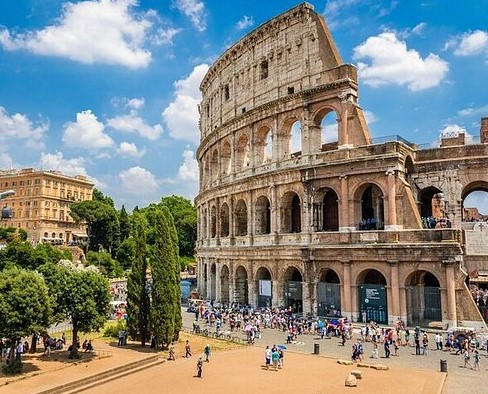
Imagine standing before the massive, weather-worn facade of a Gothic cathedral at noon. You watch crowds of tourists snap quick selfies, tilt their heads up for five seconds, and walk away toward the nearest souvenir shop. Meanwhile, right above their heads, intricate flying buttresses and hand-carved gargoyles are silently telling a 700-year-old story of structural engineering, civic ambition, and master stonemasonry—a story completely missed by 95% of visitors.
Over my ten years of leading cultural explorations across Europe, the Middle East, and Asia, I have seen this phenomenon unfold at nearly every world heritage site. Architecture is the ultimate physical anchor of human history, yet embarking on heritage architecture tours without understanding the technical design languages, structural mechanics, and historical contexts can turn a breathtaking monument into just another pile of old stones.
If you are a beginner looking to move beyond surface-level sightseeing or an intermediate traveler eager to decipher the world’s built marvels, this deep-dive guide will transform how you see, interpret, and experience historical monuments across the globe.
Why Architecture Is the Ultimate Time Machine
When we look at ancient monuments, we aren’t just viewing artistic expressions; we are observing solved engineering problems from centuries past.
Decoding the Built Environment
Historic structures were built under strict constraints of material availability, physics, and local climate.
-
Socio-Political Statements: The sheer scale of a Roman aqueduct, an Islamic citadel, or a Mughal mausoleum was designed to project power, order, and cultural dominance.
-
Engineering Innovations: Concepts like barrel vaults, pointed arches, and dome load distribution represented the apex of human technology in their respective eras.
-
Material Storytelling: Local geology dictated regional aesthetics—from the pink sandstone of Rajasthan to the volcanic basalt of Indonesian temples and the travertine marble of classical Rome.
Think of an ancient stone monument as a complex 3D puzzle assembled without modern cranes, computer modeling, or steel rebar. Every arch, column, and mortar joint exists because gravity demanded it to keep the ceiling from collapsing onto the builders.
Global Hotspots for Heritage Architecture Tours
While historical buildings grace every continent, specific regions offer dense concentrations of distinct architectural styles that showcase the evolution of human building techniques.
                    ┌─────────────────────────────────────────┐
                    │     ARCHITECTURAL STYLE MAP             │
                    └────────────────────┬────────────────────┘
                                         │
     ┌───────────────────────────────────┼───────────────────────────────────┐
     ▼                                   ▼                                   ▼
[ CLASSICAL & GOTHIC ]             [ ISLAMIC & MUGHAL ]               [ DRAVIDIAN & NAGARA ]
 • Flying buttresses & vaults     • Muqarnas & geometric tilework    • Towering gopurams & mandapas
 • Pointed arches & rose windows  • Squinches & load-bearing domes   • Monolithic stone carvings
 • Location: Western Europe       • Location: Middle East & S. Asia  • Location: South Asia & SE Asia
1. Western Europe: Gothic Masterpieces and Classical Symmetry
European architectural circuits offer a clear timeline of structural evolution from Roman round arches to soaring Gothic cathedrals.
-
Key Highlights: The flying buttresses of Notre-Dame, the Renaissance dome engineering of Florence’s Duomo, and the Moorish horseshoe arches of the Alhambra in Spain.
-
Best For: Travelers interested in structural physics, stained-glass light dynamics, and civic medieval history.
2. Middle East & Central Asia: Islamic Geometry and Domes
Islamic architectural heritage is renowned for its mathematical precision, tilework, and intricate structural adaptations.
-
Key Highlights: The blue-tiled domes of Samarkand in Uzbekistan, the complex stalactite vaulting (muqarnas) of Isfahan in Iran, and the intricate red sandstone carving of Fatehpur Sikri in India.
-
Best For: Photography enthusiasts, lovers of geometric design, and admirers of medieval brick engineering.
3. South and Southeast Asia: Monolithic Stone and Sacred Cosmology
Asian heritage architecture often merges structural stone carving with complex religious alignment and astronomical orientation.
-
Key Highlights: The sprawling sandstone galleries of Angkor Wat in Cambodia, the carved cave temples of Ellora in India, and the stepped stone terraces of Prambanan in Indonesia.
-
Best For: Travelers fascinated by rock-cut architecture, sacred geography, and ancient urban planning.
Decoding Structural Elements: A Beginner’s Lexicon
To get the most out of heritage architecture tours, learning a few fundamental architectural terms helps you instantly recognize how an ancient building holds itself up.
1. Load-Bearing Structures and Arches
Before modern steel frames, stone walls carried all the weight of a building directly down to the foundation.
-
Post-and-Lintel: The simplest structural system—two vertical posts holding up a horizontal beam (think Stonehenge or the Parthenon).
-
The Arch (Roman vs. Gothic): Roman round arches push weight outward as well as down, requiring thick walls. Gothic pointed arches direct weight more vertically, allowing for thinner walls and massive stained-glass windows.
-
Flying Buttress: An exterior masonry arch that extends from the upper wall to an outer pier, reinforcing high stone vaults against wind and lateral gravity loads.
2. Domes and Transition Elements
Placing a round dome on top of a square room was one of antiquity’s toughest engineering hurdles.
-
Pendentives: Triangular curved masonry sections that seamlessly transition a square room into a round dome base (famously used in Hagia Sophia).
-
Squinches: Diagonal arches built across the upper corners of a square room to create an octagonal base capable of supporting a dome.
Field Observation: While examining the ruins of ancient temples in Asia, I noticed that guidebooks frequently praise surface carvings, yet the true magic lies in the joinery. Look closely at dry-stone masonry where interlocking tenon joints hold massive blocks together without a single drop of mortar—a technique that has survived centuries of earthquakes.
Expert Advice: Pro Tips and Hidden Warnings
To ensure your journey through historic architectural wonders is rich, comfortable, and deeply rewarding, keep these insider recommendations in mind:
-
Pro Tip: Pack a Pair of Lightweight Compact Binoculars: Architectural masterpieces store their finest details—sculpted friezes, vaulting ribs, and ceiling frescoes—high above eye level. A small pair of 8×25 binoculars turns distant ceiling vaulting into a crystal-clear, intimate view.
-
Hidden Warning: Beware of Scaffolding and Restoration Windows: Major historic monuments undergo periodic structural conservation. Always check local heritage site notices or municipal restoration calendars before booking to avoid arriving at a monument covered entirely in metal construction scaffolding.
-
Pro Tip: Time Your Visit with Architectural Lighting: Stone facades change dramatically depending on the angle of sunlight. Visit east-facing temple gates at sunrise for warm side-lighting that emphasizes relief carvings, and explore Gothic interiors at mid-day when sunlight hits stained-glass windows at full intensity.
-
Hidden Warning: Mind the Acoustic Rules in Sacred Monuments: Many historic domes and stone halls feature exceptional natural acoustics designed for choral or vocal resonance. Loud talking or shouting inside these spaces disrupts the contemplative atmosphere and can draw sharp reprimands from local site guardians.
Unlocking the Stories Written in Stone
Taking part in heritage architecture tours is far more than an academic exercise—it is a deeply inspiring way to walk through human history. When you understand the engineering triumphs, artistic choices, and cultural motivations carved into ancient masonry, every archway, column, and dome becomes a living portal to the past.
Pack your curiosity, keep your eyes looking upward, and get ready to discover the world’s legacy of stone on your next journey!
Over to You: What is the most awe-inspiring historical building or ancient monument you have ever stepped inside? Or which architectural style—Gothic, Islamic, Ancient Classical, or Asian stone—are you most excited to explore next? Share your thoughts and questions in the comments below!
