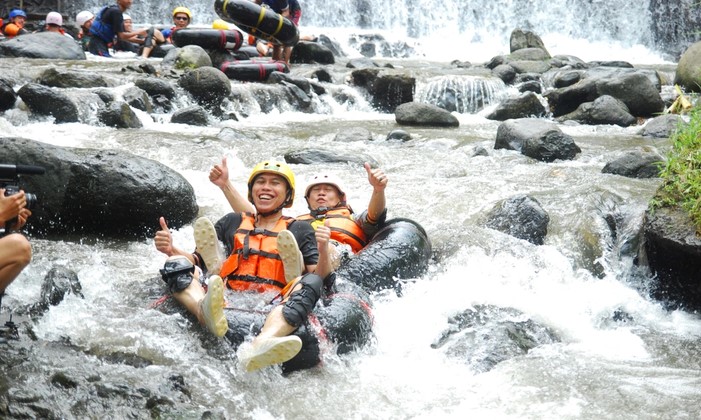
Picture this: It is mid-July, the sun is blazing, and your family group is standing at the edge of a rushing river with a stack of inflated heavy-duty rubber tubes. Half your crew is terrified of getting swept away, while the other half thinks floating down a river is just a lazy afternoon nap on water.
Within ten minutes of hitting the first stretch of whitewashed rapids, everyone’s plan goes out the window. Your uncle spins 360 degrees into a eddy, the kids are roaring with laughter, and you realize that navigating river currents takes a lot more strategy than anyone let on.
Over my past decade exploring outdoor waterways across five continents—from the wild river channels of New Zealand to gentle limestone canyon streams in Southeast Asia—I have seen river tubing adventures evolve into one of the most accessible yet misunderstood water sports on the planet.
Many beginners assume river tubing is simply lying flat on an inner tube and letting gravity do all the work. In reality, a river is a dynamic fluid highway. Understanding how to read hydraulics, choose the right gear, and stay safe turns a chaotic afternoon into an unforgettable bonding experience for friends and family alike.
Here is my complete, battle-tested operational guide to master your next river floating trip.
The Physics of Floating: Understanding River Dynamics
Before you launch into the water, you need to treat the river like an active conveyor belt with its own set of rules.
A river doesn’t flow at one uniform speed. Water travels fastest along the outside of river bends and in the upper center of the channel (known as the thalweg), while slow-moving pockets of water collect near shallow banks and behind boulders.
[Main Current / Thalweg] → Fast Water Flow → High Drift Speed
[Eddy Lines / Bends]     → Recirculating Water → Slow / Trapping Zone
Think of a river system like a multi-lane highway:
-
The Fast Lane (Main Current): The deepest, clearest channel carrying maximum momentum. Keeping your tube aligned here ensures smooth progress downriver.
-
The Exit Ramps (Eddies): Swirling pools of water behind large rocks or riverbends where the current flows backward upstream. If your tube enters an eddy, you will spin in circles until you physically paddle out.
-
The Speed Bumps (Riffles & Strainers): Shallow gravel bars and submerged trees. Understanding how to steer away from them is the difference between a pristine run and a punctured tube.
Essential Gear Setup for Peak Performance
Showing up with a cheap pool float from a big-box retail store is the single biggest mistake first-timers make. Pool vinyl tears the moment it touches jagged river rock or submerged roots.
| Gear Item | Recommended Specification | Purpose & Functionality |
| Commercial Inner Tube | Heavy-duty PVC or covered Denier canvas | Resists punctures from sharp rocks and snagging branches. |
| PFD (Life Jacket) | Type III or Type V USCG-approved vest | Keeps head above water in turbulent Class I-II rapids. |
| River Footwear | Closed-toe water shoes or strapped sandals | Protects toes against rocky bottoms and slippery algae. |
| Dry Bag | 10L to 20L Roll-top waterproof bag | Keeps keys, phones, and emergency first-aid dry during flips. |
| Paddling Gloves | Neoprene or synthetic mesh | Prevents friction blisters when hand-paddling against currents. |
Matching River Difficulty to Your Group
When planning river tubing adventures, matching the river grade to your weakest swimmer or youngest family member is non-negotiable. River rapids are classified using the International Scale of River Difficulty.
Class I: Fast-Moving Water with Small Riffles
-
Ideal For: Multigenerational families, young kids (ages 5+), and absolute beginners.
-
Water Conditions: Clear passages, minimal obstacles, and smooth waves under one foot high.
-
Navigation Skill: Basic hand-paddling to avoid shallow river banks.
Class II: Novice Water with Regular Waves & Clear Passages
-
Ideal For: Active adults, teenagers, and adventurous beginners looking for adrenaline.
-
Water Conditions: Wide channels, medium-sized waves up to two feet high, and obvious rocks to dodge.
-
Navigation Skill: Requires active maneuverability, back-paddling, and group maneuvering commands.
Step-by-Step Technique: Navigating Rapids Like a Pro
Commanding an inflatable tube requires subtle body positioning rather than sheer muscular strength.
-
Adopt the “Feet First, Eyes Forward” Posture: Never float head-first down rapids. Sit back into the tube seat with your hips lifted high to clear shallow rocks (“butt up!”), pointing your feet downstream so your legs absorb any unexpected bumps.
-
Master the Back-Paddle Sweep: To steer left or right, lean slightly toward your desired direction and use wide, backward arm sweeps through the water. Backward strokes yield twice as much control as forward paddling on a circular tube.
-
Form a “T-Ducky” Chain in Calm Water: On long, flat river pools, link group tubes by tucking your feet under the armpits of the person behind you. This creates a stable human raft that keeps your group from drifting apart during slow stretches.
Pro Advice: Expert Tips for a Flawless Trip
-
Hydrate via Carabiners: Dehydration sneaks up on water trips due to wind and sun exposure. Clip reusable water bottles directly to your tube handles using locking carabiners so they don’t sink if your tube tips.
-
Sunscreen Application Timing: Apply broad-spectrum waterproof sunscreen at least 30 minutes before stepping into the water. Applying it right on the riverbank means it washes straight off into the aquatic ecosystem, leaving your skin exposed.
-
Secure Eyewear with Retention Straps: Sunglasses vanish into river bottoms instantly during flip-overs. Always use floating eyewear retainers (like Chums or Croakies).
Hidden Hazards: What Every Tubing Leader Must Know
Warning: Beware of Strainers and Low-Hanging SweepersA “strainer” is any submerged object—such as a fallen tree, brush pile, or chain-link fence—that lets water pass through while trapping solid objects like tubes and humans. Strainers are extremely dangerous because strong river currents pin you against them under water pressure. If you see a fallen tree ahead, start paddling across the current to the opposite side of the river immediately.
Another hidden trap is wearing loose cotton clothing. Cotton absorbs water, gets heavy, loses all insulation value, and drastically increases hypothermia risks even in warm weather. Always opt for quick-drying synthetic fabrics like nylon, polyester, or rash guards.
Final Thoughts & Community Experience
Few outdoor activities bridge the gap between pure relaxation and heart-pounding adventure quite like river tubing adventures. When you respect the river’s power, pack the correct technical gear, and master basic maneuvering skills, floating down a scenic canyon stops being stressful and becomes pure summer magic.
Have you ever taken your family or friends out on a river tubing trip? What’s your absolute favorite river run, or what gear tip saved your day on the water? Drop your thoughts, questions, and stories in the comments below!
