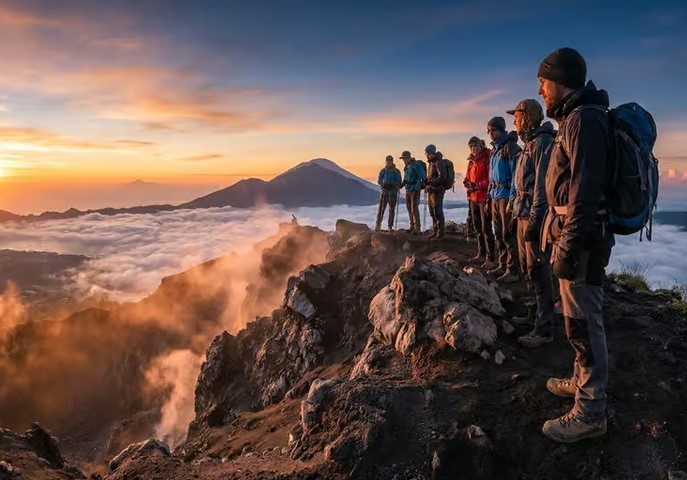
The sulfur fumes hit the back of my throat at 3:00 AM, sharp and chemical, even through a double-filtered respirator. Underfoot, volcanic ash felt less like soil and more like dry, shifting memory foam—for every two steps forward on the 30-degree incline of Mount Bromo, I slid one step back into the dark. Yet, when the first amber rays of dawn pierced through the crater’s edge, revealing a roaring, steam-venting abyss below, every drop of sweat made total sense.
Most travelers spend their lives observing the Earth from a polite distance—from air-conditioned observation decks or scenic highway pull-offs. Volcano trekking adventures force you to step directly onto the raw, living engine of our planet. It’s an intoxicating mix of high-altitude physical challenge, geological wonder, and pure adrenaline that standard mountain hiking simply cannot replicate.
                   THE VOLCANO TREKKING LANDSCAPE

   Standard Alpine Hiking                  Volcano Trekking Routes
┌──────────────────────────┐            ┌─────────────────────────┐
│ • Stable dirt & granite  │            │ • Loose scree & ash     │
│ • Predictable weather    │   ──────►  │ • Active fumaroles/gases│
│ • Gradual eco-zones      │            │ • Rapid thermal shifts  │
│ • Long trail networks    │            │ • Raw, planetary scale  │
└──────────────────────────┘            └─────────────────────────┘
What Makes Volcanic Terrain Unique?
Think of trekking an active or dormant volcano like walking across the surface of a freshly baked loaf of sourdough bread. The top crust might look solid, but beneath it lies a complex network of air pockets, fragile mineral crusts, and intense thermal heat.
Unlike granite mountain ranges forged over millions of years of gradual tectonic collision, volcanic landscapes are dynamic, unstable, and constantly changing.
When you sign up for volcano trekking adventures, you are dealing with environmental variables found nowhere else on Earth:
-
Unstable Volcanic Scree (Tephra): Loose, porous rock and fine ash reduce traction, requiring specialized footwork and trekking poles.
-
Geothermal Vents (Fumaroles): Openings in the Earth’s crust that emit toxic gases like hydrogen sulfide ($H_2S$) and sulfur dioxide ($SO_2$), demanding proper breathing protection.
-
Extreme Micro-Climates: Dark basalt rock absorbs intense solar radiation by day but radiates heat rapidly at night, creating massive 40-degree temperature swings.
Bucket-List Destinations for Volcano Trekking Adventures
Over my ten years logging miles across the Pacific Ring of Fire and the Atlantic rift zones, three distinct regions stand out as absolute masterclasses in volcanic exploration for beginner and intermediate trekkers.
1. Mount Rinjani & Mount Bromo (Indonesia)
Indonesia holds the highest density of active volcanoes on Earth. Climbing the crater rim of Mount Rinjani on Lombok offers an unbelievable multi-day trek ending at a pristine crater lake (Segara Anak).
For beginners, the sunrise trek across the Sea of Sand to Mount Bromo’s roaring caldera on Java provides maximum visual impact with minimal technical climbing.
-
Best For: Dramatic crater lakes, active steam vents, and rich cultural traditions.
-
Key Highlight: Standing on the caldera edge of Bromo at sunrise while the Earth literally rumbles beneath your boots.
2. Acatenango & Fuego (Guatemala)
If seeing live, glowing lava eruptions is at the top of your bucket list, overnighting on Mount Acatenango is non-negotiable.
You ascend through agriculture zones, cloud forests, and alpine slopes to camp at 3,800 meters. From your campsite, you sit directly face-to-face with Mount Fuego as it blasts orange magma into the night sky every 20 to 30 minutes.
3. Pacaya & Mount Etna (Central America & Europe)
For those looking to ease into volcanic terrain without four-day wilderness expeditions, Sicily’s Mount Etna and Guatemala’s Pacaya offer accessible, day-hikeable basalt fields where you can walk alongside dried lava flows and cook food over subterranean heat vents.
| Destination & Country | Elevation / Gain | Technical Difficulty | Highlight Feature |
| Mount Bromo (Indonesia) | 2,329 m / 200 m | Beginner | Sea of sand & roaring crater rim |
| Mount Acatenango (Guatemala) | 3,976 m / 1,600 m | Intermediate–Advanced | Front-row views of erupting Volcán de Fuego |
| Mount Etna (Italy) | 3,357 m / Varied | Beginner–Intermediate | Lunar basalt fields & ancient lava tubes |
| Tongariro Crossing (New Zealand) | 1,978 m / 800 m | Intermediate | Emerald crater lakes & active steam vents |
Technical Gear & Safety Mechanics for Volcanic Trails
Heading into active volcanic zones without the right gear isn’t just uncomfortable—it can quickly turn dangerous. Volcanic ash is microscopic, abrasive glass that destroys standard hiking gear if you aren’t prepared.
Essential Protective Gear Checklist
Standard trail gear isn’t enough when battling sulfur and ash. Make sure your pack includes:
-
High-Top Boots with Reinforced Randing: Sharp basalt rock cuts soft mesh running shoes to shreds. Choose full-grain leather or synthetic boots with heavy rubber toe guards.
-
Breathable Trail Gaiters: Keep fine, abrasive volcanic ash out of your socks and boots to prevent severe friction blisters.
-
Dual-Filter Gas Respirator or Buff: Essential when navigating downwind sections of sulfur-emitting craters.
-
Sturdy Trekking Poles with Rubber Tips: Crucial for maintaining balance on loose, sliding scree fields during steep descents.
Understanding Volcanic Alert Levels
Before embarking on any volcano trekking adventures, always check the local geological agency’s advisory status. Volcanologists monitor seismic activity using a simple numeric scale:
$$\text{Volcanic Alert Level} = \begin{cases} 0 & \text{Normal / Dormant} \\ 1 & \text{Unrest / Minor Gas Vents} \\ 2 & \text{Moderate Unrest / Restricted Summit Zone} \\ 3-5 & \text{Eruption Imminent or Active / Full Evacuation} \end{cases}$$
Never attempt to climb past safety perimeters when an agency designates Level 2 or higher without certified local mountain guides.
Pro Tips & Hidden Pitfalls: Hard-Learned Field Lessons
After a decade of exploring volcanic craters worldwide, I’ve picked up crucial insights that you won’t find in standard travel guidebooks.
Pro Tip: Protect your camera gear and smartphone charging ports with sealed dry bags or zip-lock pouches. Volcanic ash contains magnetic iron and silica dust that easily ruins lens glass and shorts out sensitive electronics charging ports.
Hidden Warnings to Keep in Mind:
-
The “Scree Sliding” Knee Hazard: Descending loose volcanic ash slopes feels like skiing on gravel. Keep your knees bent, lean slightly back onto your heels, and let your feet slide smoothly rather than slamming your joints hard into the ground.
-
Beware Hydrothermal Heat Traps: Never step off established trails near thermal fields. What looks like solid white crust can actually be a thin mineral layer hiding boiling acidic mud or steam vents underneath.
-
Dehydration in Dry Basalt Fields: Dark volcanic rock acts like an oven floor, reflecting heat straight back up at your body. Double your standard water intake and pack electrolyte tablets to replace salt lost through heavy sweating.
Stand on the Living Earth
There is something deeply grounding about standing on the edge of a active volcanic crater. It reminds us that our planet isn’t just a static backdrop for our busy lives, but a dynamic, living force that is constantly creating new land.
By equipping yourself with the right footwear, respecting local geological warnings, and preparing for loose ash and scree, you transform an intimidating climb into an unforgettable lifetime achievement.
Have you ever stood on the crater rim of an active volcano, or is a trek across volcanic ash sitting at the top of your travel bucket list? Share your experiences in the comments below, or drop your route-planning questions so I can help you prepare for your next epic adventure!
