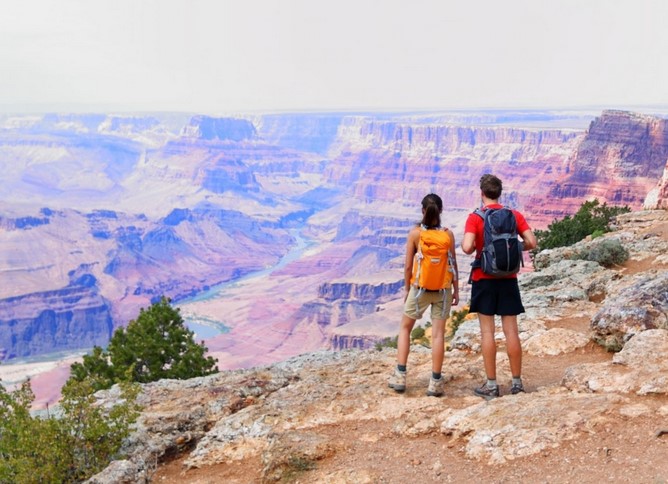
You’re six miles into the backcountry, the sun is dipping behind a jagged granite peak, and suddenly you realize that “waterproof” jacket you bought on sale is actually acting like a plastic bag, trapping every ounce of sweat against your skin. Your GPS is flickering because of the deep canyon walls, and that “easy” trail on the map has turned into a vertical scramble over loose scree. We’ve all been there—the moment where the majesty of nature meets the harsh reality of being unprepared.
Over the last decade, I’ve laced up my boots in over forty countries, from the windswept plateaus of Patagonia to the humid ridgelines of Southeast Asia. What I’ve learned is that hiking national parks is the ultimate “human reset button,” but it’s also a technical challenge that rewards the disciplined. It’s not just about the destination; it’s about managing your internal and external systems so you can actually enjoy the view when you get there.
The Technical Foundation of Hiking National Parks
For many beginners, a trail is just a path. But for a seasoned hiker, a trail is a piece of engineered infrastructure with specific grade percentages and drainage systems. When you start hiking national parks, the first thing you need to master is reading the “topography” of your day.
Think of your body on a hike like a hybrid car. On the flats, you’re coasting and conserving energy. On the steep ascents, you’re burning through your “battery” (glycogen stores). If you redline your engine in the first hour, you’ll be stalled by noon. The secret to longevity on the trail is maintaining a “conversational pace”—a speed where you can still speak in full sentences without gasping.
Understanding Trail Classifications
Most national park systems use a rating scale. A “Class 1” trail is a well-maintained path (the sidewalk of the woods), while “Class 3” involves “scrambling” where you’ll need to use your hands for balance. Knowing these technical distinctions before you leave the visitor center is the difference between a sunset photo and a search-and-rescue call.
Global Icons: Destinations That Redefine the Trek
If you are looking to move from beginner strolls to intermediate adventures, these three national parks offer the perfect classroom for honing your skills.
1. Yosemite National Park, USA: The Granite Cathedral
Yosemite is the birthplace of modern climbing and hiking culture. The sheer scale of El Capitan and Half Dome is humbling.
-
The Challenge: High elevation gain over short distances.
-
My Insight: Most people crowd the valley floor. If you want the real Yosemite, seek out the “High Sierra” loops. I’ve found that even moving two miles away from the shuttle stops reduces the crowd density by 80%, giving you a private audience with the wilderness.
2. Torres del Paine, Chile: The Patagonia Gauntlet
This is the “W-Trek,” a rite of passage for any serious hiker. It’s famous for having “four seasons in one day.”
-
The Technicality: Microclimates. You can be in a t-shirt at the base and in a blizzard at the “Base Las Torres” lookout.
-
Pro Tip: Pack for the wind, not just the cold. The Patagonian winds can reach 100km/h, which can strip the heat from your body faster than sub-zero temperatures.
3. Fuji-Hakone-Izu National Park, Japan: Sacred Strides
Hiking in Japan is a blend of volcanic geology and deep spirituality.
-
The Experience: Unlike the rugged isolation of the US, Japanese trails often feature Yamabushi (mountain ascetic) history and pristine mountain huts.
-
Observation: The trail engineering here is world-class, often featuring intricate stone steps that have survived centuries of typhoons.
Gear Logic: The “Big Three” Systems
I’ve seen hikers carry cast-iron pans and massive speakers, while forgetting basic insulation. When hiking national parks, your gear should be organized into “Functional Systems.”
-
The Footwear System: Your boots are your tires. For beginners, a mid-cut boot with a Vibram sole provides the necessary ankle stability for uneven “root-and-rock” terrain. Always pair them with wool-blend socks to manage moisture and prevent blisters.
-
The Hydration System: Don’t just carry a bottle; understand your liter-per-hour requirements. In high-altitude parks, you lose moisture through respiration twice as fast as at sea level. I prefer a reservoir (bladder) because it encourages “micro-sipping,” keeping your blood volume stable.
-
The Navigation System: Your phone is a tool, not a fail-safe. Cold weather kills lithium-ion batteries. I always carry a physical topographic map and a small button compass. Even if you don’t know how to do complex “triangulation,” knowing which way is North can save your life.
Managing the “Human Factor” on the Trail
The biggest obstacle to a successful hike isn’t the mountain—it’s your ego. I’ve had to turn back 200 meters from a summit because of an incoming electrical storm. It stung, but the mountain will be there tomorrow; you might not be.
Analogy: The Backpack as an Anchor
Your backpack weight should be no more than 20% of your body weight. Think of it like carrying a small child on your back. Every extra pound is a “tax” on your knees and hip flexors. Before you pack that extra “just in case” item, ask yourself: Will this help me survive, or is it just baggage?
Expert Advice: Tips Pro & Hidden Warnings
Tips Pro: The “Lacing” Technique
Most people tie their boots the same way for the whole hike. Big mistake. When going uphill, leave the top eyelets slightly loose to allow for ankle flexion. Before a long descent, tighten the “instep” laces to prevent your toes from slamming into the front of the boot (the leading cause of “hiker’s toe” or bruised nails).
The “Switchback” Shortcut
You’ll often see “social trails” that cut straight across a zigzagging switchback. Never take them. Cutting switchbacks causes severe soil erosion and destroys the trail’s structural integrity. In many parks, it’s also a finable offense. Respect the engineering; it’s there to protect the park from you.
Leave No Trace: The Hiker’s Code
As we see a massive increase in people hiking national parks, the “Leave No Trace” (LNT) principles have become a technical necessity.
-
Pack it in, Pack it out: This includes orange peels and nutshells, which take years to decompose in high-altitude environments and disrupt the diet of local wildlife.
-
The “Bio-Zone” Rule: Stay on the durable surfaces. Stepping off-trail in alpine tundra can kill plants that took fifty years to grow just a few inches.
Conclusion: The First Step is the Hardest
The beauty of our global national parks is that they are the most democratic spaces on Earth. They don’t care about your job title or your social media following; they only care about your preparation and your respect for the land. Whether you are tackling a local three-mile loop or planning a multi-day trek through the Andes, the key is to start small, learn your gear, and listen to the rhythm of your own breath.
The trail is calling, and it has a story to tell you—but only if you’re prepared to listen.
