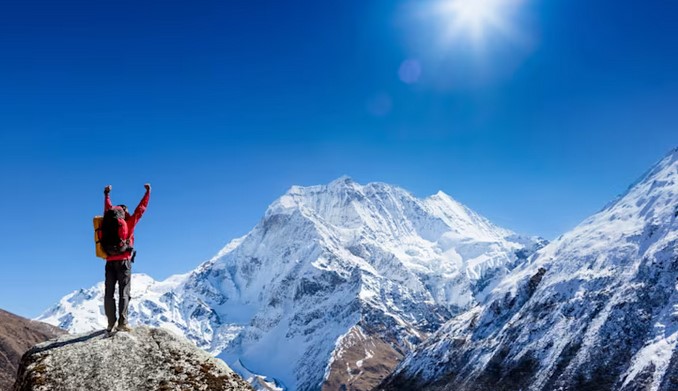
You’re standing at the trailhead, staring up at a jagged, snow-capped horizon that looks like a row of broken shark teeth. Your heart is racing—partly from the altitude, but mostly from the realization that you’ve just spent three months’ savings on a single expedition. For many, the “dream trek” feels like an elite club with a massive cover charge. I’ve seen hikers drop $5,000 on a Kilimanjaro climb only to realize the person trekking right next to them paid half that for the exact same route.
In my decade of traversing ridges from the Andes to the Himalayas, I’ve learned that the mountains don’t charge an entrance fee—it’s the logistics that eat your wallet. High-altitude adventure doesn’t have to be a financial sacrifice. I’ve managed to summit iconic peaks while keeping my daily spend lower than a night out in London or New York. The secret lies in navigating the complex world of budget trekking packages without compromising on safety or the “soul” of the journey.
If you’ve been waiting for a “sign” to book that flight because your bank account said no, this deep-dive is your roadmap to the peaks that won’t break the bank.
The Anatomy of Budget Trekking Packages
Think of a trekking package like a modular PC build. You have the core “Operating System” (guides, permits, and basic food) and then you have the “Upgrades” (private porters, luxury lodges, and flown-in Western meals).
When we talk about budget trekking packages, we aren’t talking about “cheap” in a dangerous sense. We are talking about Lean Logistics. This means staying in local teahouses instead of heated glamping tents and eating what the locals eat—which, trust me, is better for your digestion at 4,000 meters anyway.
The “All-Inclusive” Illusion
One technical detail beginners often overlook is the difference between “Base Price” and “Total Cost of Ownership.” A $600 package might seem like a steal, but if it doesn’t include National Park Permits (TIMS), gear rental, or emergency evacuation insurance, you’re looking at a $1,200 bill by day three. Always check the Inclusions vs. Exclusions list with a magnifying glass.
Where to Find the Most Value in 2026
If you want to maximize your vertical gain per dollar spent, you need to look at regions where the local currency and established infrastructure play in your favor.
1. Nepal: The Teahouse Efficiency
Nepal is the undisputed heavyweight champion of budget trekking packages. Because of the “Teahouse Trekking” model, you don’t need to pay for a massive crew to carry tents and kitchens.
-
The Experience: The Annapurna Base Camp (ABC) trek is currently one of the best value-for-money routes.
-
The Insight: I’ve found that booking with a local agency in Kathmandu or Pokhara—rather than a giant international firm—can save you 40% immediately. These local operators have direct “handshake” agreements with lodge owners that global websites can’t match.
-
LSI Keywords: High-altitude acclimatization, Sherpa logistics, tea house accommodation.
2. Morocco: High Atlas Minimalism
Mount Toubkal is the highest peak in North Africa, and it is a budget trekker’s paradise.
-
The Experience: You can find 2-to-3-day guided packages starting from Marrakech that are incredibly affordable.
-
The Technical Edge: The “Refuge du Toubkal” system allows for a very low-cost base camp experience. You aren’t paying for luxury; you’re paying for a bunk and a bowl of Tagine that tastes like heaven after a 1,000-meter ascent.
3. Vietnam: The Sapa Hidden Trails
For those who prefer lush greenery and tribal culture over permanent snow, the northern highlands of Vietnam offer stunning value.
-
The Experience: Multi-day treks through the Hoang Lien Son mountains.
-
Pro Tip: Look for “Homestay-based” packages. Not only are they cheaper, but the money goes directly into the hands of the Hmong or Red Dao families hosting you.
Navigating the Technicalities: Safety on a Budget
When you go “budget,” you cannot afford to go “low-quality” on safety. This is where the data gets technical.
-
The Guide-to-Client Ratio: A budget package should still maintain at least a 1:4 ratio. If one person gets altitude sickness, one guide must go down with them while the other continues. If there’s only one guide for ten people, that’s a red flag, not a bargain.
-
Emergency Protocols: Ask the operator if they carry a Satellite Phone or a Garmin inReach. At 2026 standards, cellular “dead zones” are still common in deep valleys.
-
Oxygen and Oximeters: Even on a budget trek, your lead guide should carry a Pulse Oximeter. Monitoring your blood oxygen saturation ($SpO_2$) daily is the only scientific way to track your acclimatization.
Expert Advice: Tips and Hidden Warnings
After a decade on the trail, I’ve developed a “Blogger’s Sixth Sense” for spotting a deal that’s too good to be true.
Tips Pro: The “Group Join” Strategy
Most agencies have “Fixed Departure” dates. If you are a solo traveler, joining an existing group is the single fastest way to slash your costs. You share the cost of the guide and the transport. I’ve often met my best travel partners in these “random” group joins.
Hidden Warning: The “Equipment Rental” Trap
Many budget trekking packages offer “Free Gear Rental.” Warning: I’ve seen rental sleeping bags that haven’t been cleaned since the 90s and boots that have lost their waterproof membrane.
-
The Solution: Bring your own “Contact Layers” (sleeping bag liner and hiking boots). Rent the “Hard Goods” like down jackets or trekking poles if you must, but never compromise on the items that touch your skin.
The “Porter Equity” Check
“Budget” should never mean “Exploitative.” Ensure your package follows the International Porter Protection Group (IPPG) guidelines. A porter should not carry more than 20kg – 25kg (depending on the region). If the agency is overloading their staff to keep your price low, they are cutting corners on ethics, and likely on your safety too.
Scannable Checklist for Booking Your Trek
Before you click “Book” on those budget trekking packages, run through this list:
-
[ ] Permits Included? (National Park, TIMS, or local area fees).
-
[ ] Acclimatization Days? (A “cheap” 5-day trek to 5,000m is a recipe for medical disaster).
-
[ ] Food/Water Policy? (Is it 3 meals a day, or just breakfast? Does it include boiled/filtered water?).
-
[ ] Transportation? (Public bus vs. private jeep—public is cheaper but adds 4-6 hours of “adventure”).
-
[ ] Guide Qualifications? (Are they licensed by the national tourism board?).
Summary: The View is the Same for Everyone
The summit doesn’t know how much you paid for your jacket. The sunrise over the Himalayas looks just as spectacular whether you slept in a $10 teahouse bunk or a $500 luxury suite. By choosing budget trekking packages with a focus on local operators and lean logistics, you’re not just saving money—anda you’re often getting a more authentic, raw experience of the mountains.
Adventure is about the grit in your boots and the air in your lungs. So, stop waiting for your savings account to hit a magic number. The peaks are waiting, and they’re more affordable than you think.
Which mountain has been on your “someday” list for too long? Are you a “DIY” trekker or do you prefer the peace of mind of a package? Let’s swap trail secrets in the comments below!
