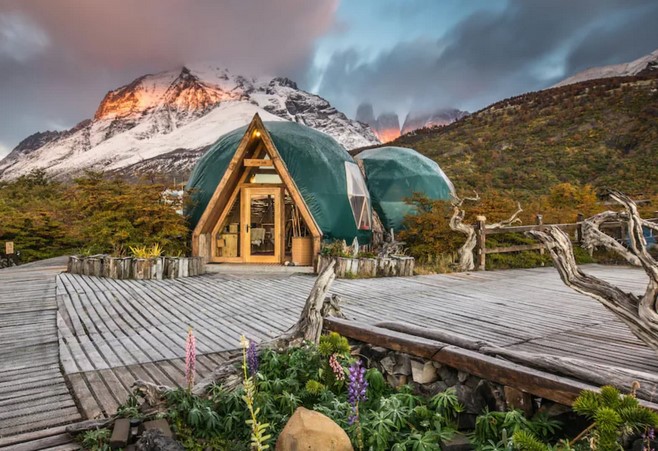
Picture this: You’re waking up to the sound of a tropical canopy exhaling—a rhythmic rustle of leaves and the distant call of a toucan—rather than the harsh beep of a hotel alarm. You reach for the light switch, only to remember that your room is powered by the very stream you crossed to get here. But then, a nagging thought hits you: Is this actually helping the planet, or am I just paying $300 a night to sleep in a glorified tent with “green” branding?
In my decade of traversing global landscapes—from the fjords of Norway to the rainforests of Kalimantan—I’ve seen the rise of “Greenwashing” firsthand. I’ve stayed in places that claimed to be “eco” because they didn’t wash my towels every day, while they simultaneously dumped greywater into the local ecosystem. True eco-lodges stays are not about what the hotel doesn’t do; they are about the sophisticated, invisible systems they do implement.
If you are ready to move beyond the superficial “reusable straw” phase of travel and want your footprints to actually matter, this deep dive into the world of sustainable stays is for you.
Decoding the DNA of Authentic Eco-Lodges Stays
To the untrained eye, any hotel made of bamboo looks “eco.” But to a seasoned traveler, an eco-lodge is like a high-performance hybrid car. On the outside, it looks like a regular vehicle, but underneath the hood, there is a complex engine of renewable energy, waste management, and community equity working in harmony.
When we talk about eco-lodges stays, we are looking at properties built on three technical pillars: Conservation, Community, and Interpretation. If one of these pillars is missing, it’s just a hotel with a nice garden.
The “Greywater” Litmus Test
One technical detail I always investigate is the Black and Greywater Treatment System. Most big resorts pipe their waste to a central city plant or, worse, a hidden septic tank. A true eco-lodge often uses Constructed Wetlands—a series of biological filters (plants and gravel) that naturally purify water so it can be returned to the earth. If a lodge can’t explain where their bubbles go when you shower, they aren’t truly eco-friendly.
What to Look for Before You Book
Navigating the world of sustainable accommodation can feel like a maze. For beginners and intermediate travelers, here is how I vet a property before I even pack my bags.
1. Renewable Energy Micro-Grids
True eco-lodges stays often operate on a Micro-Grid. This means they generate their own power via Photovoltaic (solar) arrays, micro-hydro turbines, or wind.
-
The Experience: I once stayed at a lodge in the Andes where the electricity was cut at 10 PM to conserve the battery bank.
-
The Insight: This “limitation” actually forced me to reconnect with the natural rhythm of the day. It’s not a lack of service; it’s a luxury of presence.
2. Low-Impact Architecture (Passive Design)
A building shouldn’t need a massive AC unit to stay cool. Look for lodges that use Passive Solar Design and Cross-Ventilation.
-
Why it matters: By aligning the building with prevailing winds and using high-thermal-mass materials (like stone or rammed earth), the lodge maintains a comfortable temperature naturally. This is the difference between sleeping in a “hot box” and a living, breathing structure.
3. Hyper-Local Supply Chains
Does the menu feature salmon in the middle of a desert? If so, run. The Carbon Footprint of a lodge’s kitchen is a massive indicator of its integrity. The best stays source 80% of their ingredients within a 20-mile radius, supporting local farmers and reducing transport emissions.
Iconic Regions for True Eco-Immersion
If you’re looking for the gold standard of eco-lodges stays, these regions are leading the world in sustainable innovation.
Costa Rica: The Global Pioneer
Costa Rica didn’t just join the eco-trend; they built the blueprint.
-
What to look for: Look for the CST (Certificate for Tourism Sustainability). It’s a rigorous government rating from 1 to 5 “leaves.”
-
My Observation: The best spots here aren’t just hotels; they are private biological reserves. Your stay literally pays the salary of the rangers protecting the forest from poachers.
Indonesia: The Bamboo Revolution
From Bali to the remote islands of Raja Ampat, Indonesia is mastering Bio-Architecture.
-
The Tech: Engineers here are using “Petrified Bamboo”—treated with natural borax—to create structures that can last 50 years and are entirely compostable.
-
The Experience: Staying in a bamboo cathedral is an acoustic dream. Bamboo absorbs sound differently than concrete, creating a “soft” silence that is incredibly healing for the nervous system.
Expert Advice: Tips and Hidden Warnings
After 10 years of “eco-testing,” I’ve developed a sixth sense for what works and what’s a scam. Here is your “Blogger’s Cheat Sheet.”
Tips Pro: The “Deep Green” Audit
Don’t just look at the hotel’s website. Look at their Environmental Impact Report. If they are serious, they will have public data on their kilowatt-hour usage per guest and their waste-diversion rates. If they don’t have this data, their “eco” status is likely just a marketing vibe.
Hidden Warning: The “Eco-Price” Trap
Sometimes, “Eco” is used as a justification for high prices with low service. Warning: If a lodge is charging 5-star prices but offering 2-star amenities under the guise of “simplicity,” check if that extra money is going into a Community Trust Fund. A legitimate eco-lodge invests a percentage of every booking back into local schools or reforestation. If they can’t show you the project, you’re just paying for a trend.
The “Chemical-Free” Reality Check
When you walk into an eco-lodge, it shouldn’t smell like bleach or synthetic lavender. It should smell like the environment. True eco-stays use Biodegradable Cleaning Agents. If you see a staff member using a blue-colored industrial glass cleaner, their “eco” claims are literally being washed down the drain.
Making the Shift: How to be an Eco-Guest
Choosing eco-lodges stays is only half the battle. Your behavior as a guest is the other half.
-
Pack “Naked”: Remove all plastic packaging from your toiletries before you leave home. Most eco-lodges in remote areas have no way to recycle plastic, so whatever you bring in, stays in their local landfill forever.
-
Respect the “Low-Flow”: If the shower pressure isn’t like a power washer, it’s intentional. You are sharing a limited water source with the local flora and fauna.
-
Engage with the “Interpretation”: Most eco-lodges offer tours led by local naturalists. Take them. Understanding the Biodiversity around you is what turns a “stay” into a “purpose.”
Summary: Your Bed Can Change the World
Travel is no longer just about where we go; it’s about who we support while we’re there. By choosing legitimate eco-lodges stays, you are voting with your wallet for a world where tourism protects rather than plunders.
You’ll find that when you strip away the marble floors and the 24-hour air conditioning, you gain something much more valuable: a profound connection to the Earth and the peace of mind that your vacation didn’t come at the cost of the destination’s future.
Have you ever stayed in a place that felt truly “one with nature,” or have you been burned by a greenwashing tourist trap? Let’s swap stories in the comments—I’m curious to know which eco-labels you trust!
