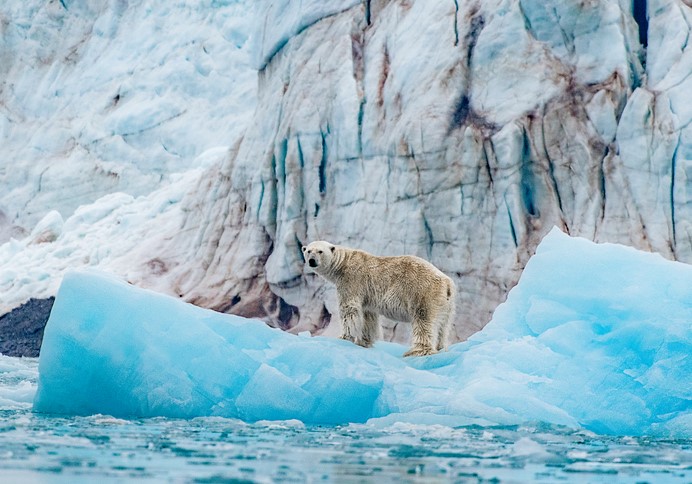
The silence at 78 degrees north is unlike anything you’ve ever heard. It isn’t the absence of sound; it’s a heavy, pressurized stillness that makes the blood pumping in your ears sound like a distant drum. Then, without warning, a piece of a glacier the size of a city block shears off into the black water with a roar that rivals a jet engine. This is the “Polar Siren”—the irresistible, terrifying call of the ends of the Earth.
Over the last decade, I’ve navigated the “Drake Shake” to reach Antarctica and trekked across the frozen tundras of Svalbard. What I’ve learned is that polar ice expeditions are the final frontier of travel. They are not “vacations” in the traditional sense; they are logistical ballets performed in the most hostile environments on the planet. If you show up unprepared, the ice won’t just ruin your trip—it will humble you in ways you never expected.
The Technical Reality of Polar Ice Expeditions
To the uninitiated, the Arctic and Antarctic look like the same giant ice cube. Technically, they are polar opposites—literally and geologically. The Arctic is a frozen ocean surrounded by continents, while Antarctica is a continent covered in ice and surrounded by a violent ocean.
When planning polar ice expeditions, you are essentially entering a world governed by “Katabatic Winds” (high-density air moving downslope) and “Cryospheric” dynamics. Understanding these technicalities isn’t just for scientists; it dictates whether your expedition ship can actually make a “Zodiac” landing or if you’ll be stuck watching the fog from the bridge.
The Physics of the “Drake Passage”
For those heading south to Antarctica, the Drake Passage is your “entrance exam.” This is where the Atlantic, Pacific, and Southern Oceans collide without any landmass to break the swell. I’ve seen 30-foot waves turn a luxury dining room into a chaotic mess of sliding chairs. The technical key here is the Antarctic Circumpolar Current, which creates a biological and physical barrier that keeps the southern continent isolated and frozen.
Choosing Your Vessel: Ice-Class and PC Ratings
One of the most critical decisions for beginners is choosing the right ship. Not all “ice-strengthened” hulls are created equal. In the industry, we look at the Polar Code (PC) ratings.
-
PC 6 & 7: These are the most common expedition vessels. They can navigate through “first-year ice” (ice that hasn’t survived a summer melt).
-
PC 1 & 2: These are true heavy-duty icebreakers. They don’t just push through ice; they use their immense weight to ride up onto the ice and crush it downward.
Think of an ice-strengthened ship like a sturdy pair of hiking boots, while a true icebreaker is a tank. If your goal is to reach the North Pole (90°N), you need the tank. If you want to see the penguins of the Antarctic Peninsula, the boots will do just fine.
Mastering the “Layering System” for Extreme Cold
I’ve seen travelers arrive in the Arctic with the thickest down jacket money can buy, only to spend the whole day shivering. Why? Because they forgot the “Moisture Management” rule.
The Thermos Analogy:
Imagine your body is a hot cup of coffee. If you put it in a metal tin, it cools down. If you put it in a vacuum-sealed thermos, it stays hot. Your clothing layers are the “vacuum.”
-
Base Layer: Must be Merino wool or synthetic. Never wear cotton. Cotton absorbs sweat, loses its insulating properties, and turns into a cold, wet rag against your skin.
-
Mid-Layer: This is your “loft.” Fleece or down that traps air.
-
Outer Shell: Your wind and waterproof shield.
On my last trip to the Ross Sea, I spent four hours in a gale-force wind. My core stayed at 37°C because I treated my clothing as a technical system, not just a set of clothes.
Top Destinations for the Brave Explorer
1. Svalbard, Norway: The Realm of the Ice Bear
This is the easiest entry point for Arctic polar ice expeditions. Departing from Longyearbyen, you enter a landscape of jagged peaks and deep fjords.
-
The Insight: This is one of the few places where you can witness the “Midnight Sun” and “Polar Night” with relative infrastructure.
-
Wildlife: It is the best place to see polar bears in their natural habitat, but it requires strict “Armed Guard” protocols whenever you leave the vessel.
2. South Georgia: The Serengeti of the South
Often an “add-on” to Antarctic trips, South Georgia is technically a sub-Antarctic island, but it offers the highest density of wildlife on Earth.
-
The Highlight: Standing among 200,000 King Penguins is a sensory overload. The sound and—honestly—the smell, are things no documentary can truly prepare you for.
Expert Advice: Tips Pro & Hidden Warnings
Tips Pro: The “Dry Bag” Double-Down
In polar ice expeditions, you spend a lot of time on Zodiacs (inflatable boats). The “Spray” isn’t just water; it’s salt-saturated, freezing slush. I always put my camera inside a small dry bag, and then put that bag inside a larger waterproof backpack. One rogue wave can instantly “brick” $5,000 worth of gear.
The “Blue Ice” Trap
When walking on glaciers or shorelines, you’ll see incredibly beautiful, translucent blue ice. Do not approach it. This ice is often extremely dense and heavy. If a “Bergy Bit” (a small iceberg) rolls while you are near it, the displacement of water can sweep you off your feet, or the ice itself can crush anything in its path. Always maintain a distance of at least three times the height of the ice.
The Ethics of Polar Travel: Leaving No Trace
The polar regions are the “canaries in the coal mine” for climate change. As an explorer, you have a technical and moral obligation to follow IAATO (International Association of Antarctica Tour Operators) and AECO guidelines.
-
Biosecurity: You will be required to vacuum your pockets and scrub your boots in “Virkon” (a disinfectant) before every landing. This prevents the introduction of invasive species or microbes that could devastate local penguin colonies.
-
Wildlife Distance: The rule is usually 5 meters. If an animal approaches you, you must remain still. We are guests in their kingdom, not the other way around.
Conclusion: Why We Face the Cold
Polar ice expeditions are expensive, physically demanding, and often uncomfortable. You will be sea-sick, you will be cold, and you will likely miss the smell of green grass.
But when you stand on a frozen sea, miles from the nearest human settlement, and watch the Aurora Borealis dance over a landscape that hasn’t changed in ten thousand years, you realize that your “bravery” wasn’t about facing the cold. It was about having the courage to leave the familiar behind and see the world in its purest, most ancient form.
Are you someone who thrives in the heat or have you always felt the pull of the Great White North (or South)? Let’s discuss your “Dream Expedition” in the comments!
