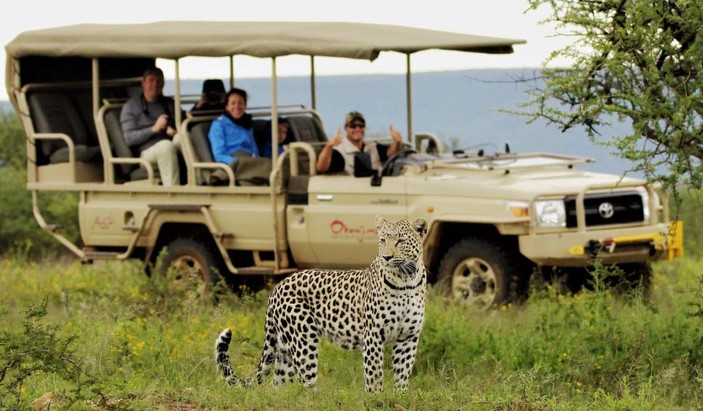
You’ve probably seen the glossy brochures: $1,500-a-night canvas suites, private plunge pools overlooking the Serengeti, and champagne sundowners served on silver trays. For decades, the travel industry has conditioned us to believe that witnessing the Big Five in their natural habitat requires liquidating a college savings fund or taking out a second mortgage.
Here is the truth almost nobody talks about: the lions don’t care whether you slept in a $2,000-a-night luxury lodge or a $30 pitched tent three miles down the road.
Over my ten-plus years as a professional travel writer tracking wildlife across East and Southern Africa, I’ve logged hundreds of hours on rough bush roads. I’ve stayed at ultra-exclusive private concessions and slept in basic dome tents surrounded by howling hyenas.
What I discovered is that finding value-driven budget safari packages isn’t about compromising on the wildlife experience. It’s about stripping away unnecessary luxury inflation and understanding how game reserves operate behind the scenes.
Here is my field-tested guide to planning an unforgettable African wildlife itinerary without breaking the bank.
Deconstructing Safari Costs: Where Your Money Actually Goes
To stretch your travel funds effectively, you need to dissect where every dollar lands in an overland itinerary.
A safari pricing structure operates like a tiered engine:
[Park Fees + Vehicle Logistics] → Fixed Core Expenses (~60-70%)
[Luxury Lodging + Private Chefs] → Optional Price Multipliers (~30-40%)
Think of a safari booking like flying commercial:
-
The Flight (Park Concession Fees): This is your mandatory entry pass. Everyone pays the exact same conservation fee to enter Kruger or the Masai Mara, regardless of whether they arrive in a rusty 4×4 or a private helicopter.
-
First Class (Private Luxury Lodges): You pay for plunge pools, butler service, fine dining, and private game-drive vehicles.
-
Economy Plus (Budget & Mid-Range Operators): You get the exact same wildlife encounters and expert tracking guidance, but sleep in clean tented camps or public rest camps and travel in shared 4×4 land cruisers.
Comparing Safari Formats: Budget vs. Luxury
Choosing the right format determines whether your money pays for real wildlife sightings or lavish amenities.
| Safari Style | Daily Cost (per person) | Accommodation Type | Game Drive Setup | Value Score |
| Overland Group Camping | $120 – $220 | Participatory / Dome Tents | Custom 4×4 Truck | High (Best for solo & youth) |
| Self-Drive Safari | $150 – $250 | National Park Rest Camps | Rental SUV / 4×4 | Extreme (Best for independence) |
| Mid-Range Join-In Tour | $250 – $450 | Tented Camps / 3-Star Lodges | Pop-top Land Cruiser | Balanced (Best for families) |
| Fly-In Luxury Safari | $1,200 – $3,000+ | All-Inclusive 5-Star Lodges | Open-sided Private 4×4 | Low (High luxury overhead) |
4 Best Destinations for Budget-Friendly Safaris
Not all African nations treat safari tourism equally. Some countries focus almost exclusively on low-impact, ultra-high-cost private tourism, while others offer world-class infrastructure for independent and budget travelers.
1. Kruger National Park (South Africa)
-
Why It Fits the Budget: Incredible paved network, high animal density, and extensive public rest camp infrastructure managed by SANParks.
-
The Insight: South Africa is the king of self-drive safaris. Renting an SUV in Johannesburg and staying in SANParks bungalows lets you track lions for less than $180 per day for two people.
2. Etosha National Park (Namibia)
-
Why It Fits the Budget: Well-maintained gravel roads and floodlit waterholes at public camps.
-
The Insight: You don’t even need to burn fuel driving all day. Sit at Okaukuejo’s floodlit waterhole at night with a thermos of tea, and black rhinos, elephants, and lions will come directly to you.
3. Masai Mara National Reserve (Kenya)
-
Why It Fits the Budget: High density of budget tented camps located right outside the main park gates (Talek and Sekenani gates).
-
The Insight: Staying just outside the official park border saves hundreds on accommodation taxes while keeping you a 5-minute drive from the main entrance for morning game drives.
4. Chobe National Park (Botswana)
-
Why It Fits the Budget: Accessible day trips operating out of Kasane town.
-
The Insight: Botswana is famous for sky-high luxury pricing, but basing yourself in Kasane allows you to take $40 river boat safaris into Chobe to view thousands of elephants up close.
Step-by-Step Curation: How to Book Cheap Without Getting Scammed
-
Book Direct with Local Operators: Skip international travel agencies based in Europe or North America. They often mark up ground packages by 30% to 50% simply to act as middlemen. Look for operators licensed by local tourism boards (like KATO in Kenya or TATO in Tanzania).
-
Travel During the Green Season (Shoulder Months): Avoid peak season (July–October). Visiting during the shoulder months (November or April–May) slashes accommodation prices by up to 40% while turning the landscape lush and green with lower crowds.
-
Opt for Join-In Group Safaris: If traveling solo or as a couple, join a scheduled small group. Sharing vehicle fuel costs, driver-guide fees, and park transit permits across 4 to 6 travelers drops the individual price drastically.
Pro Tips: Field-Tested Insights from a Decade on Trail
-
Bring High-Powered Binoculars: A pair of 8×42 or 10×42 binoculars bridges the gap between sitting in a shared vehicle and standing right next to a leopard resting in an acacia tree.
-
Pack Light, Neutral Gear: Don’t buy expensive “safari fashion.” Pack lightweight, breathable clothing in tan, khaki, or olive tones. Avoid dark blue and black, which attract biting tsetse flies in bush areas.
-
Charge via 12V Car Adapters: Budget campsites often turn off generators overnight. Bring a heavy-duty power bank and a multi-port 12V car charger to top up your camera gear while driving during game drives.
Hidden Pitfalls to Avoid
Warning: Beware of “Unlimited Mileage” ExclusionsWhen booking cheap game drives, always verify whether your driver has an unlimited mileage allowance. Rogue budget operators sometimes cap daily fuel limits, forcing guides to turn off the engine or park at roadside spots for hours instead of actively tracking wildlife across the reserve.
Also, double-check hidden costs in your quote. Make sure your final price explicitly states whether park conservation fees, transit taxes, driver-guide tips, and drinking water are included.
Final Thoughts & Community Discussion
An African safari isn’t an exclusive playground meant only for the ultra-wealthy. When you understand park fee dynamics, choose strategic destinations like South Africa or Namibia, and select reliable join-in budget safari packages, the wild African bush becomes accessible to anyone willing to swap a plunge pool for an authentic sunrise under canvas.
How about you? Is an African safari on your bucket list, or have you already found a clever way to explore the wilderness on a budget? Drop your questions, tips, and experiences in the comments below!
