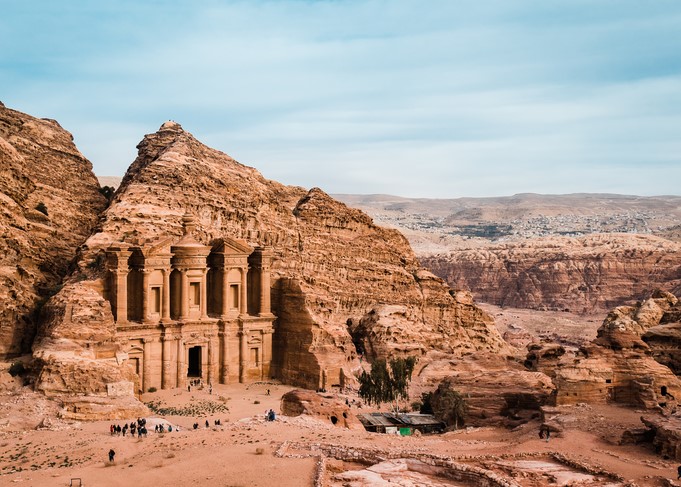
I was brushing a fine layer of dust off my camera lens in the middle of Jordan’s Wadi Rum when our local Bedouin guide pointed to a seemingly random boulder. “Look closer,” he whispered. When the late afternoon sun hit the sandstone at just the right angle, a hidden gallery of Thamudic petroglyphs emerged—carvings of camels and hunters etched into the rock 2,000 years ago. In that moment, the empty desert transformed from a barren wasteland into a vibrant, ancient highway.
For most travelers, the idea of an archaeological vacation conjures up images of crowded European museums or humid jungle treks. But over my past ten years of exploring global heritage sites, I’ve discovered a fascinating truth: the world’s most pristine historical secrets are buried under the sand.
Arid environments act like nature’s ultimate time capsule, preserving organic materials, ancient murals, and monumental architecture that would have rotted away centuries ago in tropical climates. If you are ready to trade basic sightseeing for a profound journey through time, booking dedicated desert archaeological tours is your gateway to the ancient world.
Let’s break down how to choose, survive, and thoroughly enjoy these incredible expeditions.
Why Arid Climates Hold the Key to Our Collective Past
To understand why desert archaeological tours offer such an unparalleled experience, you have to understand the science of preservation. In archaeology, moisture is the ultimate villain. It breeds mold, accelerates decay, and causes structural foundations to crumble.
Think of a desert environment like a giant household refrigerator. By removing moisture from the equation, the hyper-arid microclimates of places like the Atacama, the Sahara, or the Judean Desert freeze chemical decomposition in its tracks.
The Preservation of Everyday Life
When a civilization collapses in a wet climate, we are usually left with nothing but stone foundations. In contrast, desert excavations yield intimate glimpses into daily life: intact leather sandals, fragments of woven textiles, ancient papyrus scrolls, and even 3,000-year-old food offerings left in tombs.
When you join a specialized desert tour, you aren’t just looking at monumental ruins. You are looking at the exact structural materials and artifacts that ancient humans touched, preserved in near-perfect condition.
Unmissable Global Enclaves for Desert Archaeological Tours
Not all deserts are built the same, and neither are their ruins. Depending on your historical interests, three distinct global regions offer extraordinary open-air museums.
+------------------------+-------------------------------+------------------------------------------+
| Destination Region     | Key Archaeological Era        | Defining Feature / Must-See              |
+------------------------+-------------------------------+------------------------------------------+
| The Levant (Jordan/Oman)| Nabataean & Roman Antiquity   | Rock-cut architecture & ancient trade hubs|
| North Africa (Egypt)   | Pharaonic Dynasties           | Hypostyle halls & subterranean tombs     |
| South America (Peru)   | Pre-Inca Coastal Civilizations| Geoglyphs, mud-brick citadels, & mummies |
+------------------------+-------------------------------+------------------------------------------+
The Middle East: Masterpieces Carved in Stone
When it comes to desert archaeological tours, Jordan and Egypt remain the gold standard. In Jordan, the ancient Nabataean city of Petra showcases the peak of rock-cut architecture, where an entire metropolis was carved directly into pink sandstone cliffs.
Further west in Egypt, the dry climate of the Valley of the Kings has kept the vibrant, mineral-based pigments on the walls of Pharaonic tombs looking as bright as if they were painted last Tuesday. Walking into these subterranean chambers allows you to witness complex religious iconography without the distortion of modern restoration.
Coastal Peru: The Mud-Brick Kingdoms
A common misconception among beginners is that desert archaeology is exclusive to the Middle East. The coastal deserts of Peru house some of the most mind-boggling pre-Columbian sites on Earth.
Long before the Incas built Machu Picchu in the clouds, coastal cultures like the Chimú built Chan Chan—the largest mud-brick (adobe) citadel in the world. Nearby, the mysterious Nasca Lines remain perfectly preserved on the arid desert floor simply because the region receives less than twenty minutes of rainfall per year.
Transitioning from Tourist to Explorer: Understanding the Site Layout
Walking into an active or preserved excavation site can be dizzying if you don’t know what to look for. To get the most out of your guide’s commentary, familiarize yourself with a few fundamental structural concepts.
Spotting the Stratigraphy
Think of an archaeological site like a multi-layered cake that has been compressed over thousands of years. This layering is called stratigraphy.
On a quality desert excursion, your guide will point out different bands of soil or stone in an excavation trench. The bottom layer represents the oldest occupation era, while the top layer represents the most recent. Learning to spot these subtle changes in earth color and texture helps you visualize how different empires conquered, built over, and adapted the exact same piece of land.
Decoding Structural Elements
Keep your eyes peeled for distinct architectural features that tell us how ancient people managed the harsh climate:
-
Hypostyle Halls: Massive forests of stone columns designed to support heavy stone roofs, creating vast, shaded sanctuaries shielded from the desert sun.
-
Aqueducts and Cisterns: Complex hydraulic engineering systems carved deep into bedrock to capture and store precious flash-flood water.
-
Stratified Mounds (Tells): Artificial hills formed by generations of people living and rebuilding on the exact same spot for centuries.
Pro-Tips for Surviving and Thriving on Your Expedition
After a decade of traversing dusty outposts, I’ve learned that preparation can make or break an archaeological trip. Use these battlefield-tested tips for a flawless journey.
-
Invest in a Polarized Lens Filter: The intense glare of the desert sun can completely wash out the details of ancient inscriptions and mudbrick reliefs in your photographs. A circular polarized filter (CPL) acts like sunglasses for your camera, cutting glare and making historical carvings pop.
-
Hydrate Forty-Eight Hours Prior: Don’t wait until you step onto the hot sand to start chugging water. The extreme evaporation rates in arid zones mean you lose moisture rapidly through sweat without realizing it. Start increasing your water and electrolyte intake two days before your tour begins.
-
Wear Closed-Toe, Hard-Sole Boots: Loose desert sand can hide sharp flint fragments, scorpions, and intense radiant heat. Ditch the soft mesh sneakers and opt for sturdy leather or synthetic hiking boots with a thick sole to protect your feet.
Expert Advice: The Hidden Warning for Heritage Travelers
Here is a crucial piece of insider advice: Beware of unauthorized “tomb raids” and black-market artifact vendors.
When taking part in desert archaeological tours, you will inevitably be approached by local vendors offering to sell you “authentic” ancient coins, pottery shards, or arrowheads they claim to have found in the dunes.
Buying these items is not only a direct violation of international heritage preservation laws, but it can also land you in severe legal trouble at airport customs. More importantly, removing an artifact from its original location strips it of its context—rendering it useless to historical science. Stick to taking photos and leave the artifacts exactly where history intended them to rest.
Unearthing Your Next Adventure
There is a profound humility that comes with standing before a monument that has successfully defied the passage of time and the shifting sands. When you embark on an archaeological tour through the desert, you are pulling back the curtain on the triumphs, innovations, and daily struggles of ancestors who mastered some of the harshest environments on Earth.
Which ancient desert civilization captures your curiosity the most? Are you drawn to the monumental rock-cut treasuries of the Middle East, or are you eager to decode the mysterious lines etched into the coastal deserts of South America? Let’s talk about it in the comments below, and let’s start planning your expedition into the sands of history!
