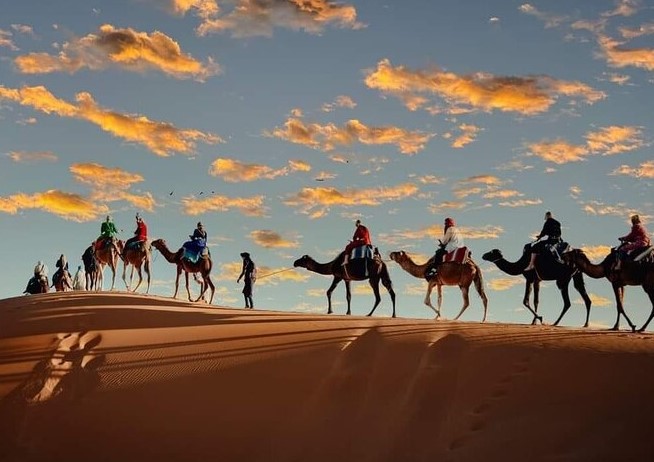
Picture this: you are sitting on a massive sand dune at twilight, watching the golden light fade into a sharp violet horizon while incredible silence wraps around you. Then, just two hours later, the temperature drops by 20 degrees Celsius, a fierce desert wind picks up, blowing fine grit directly through your tent zippers, and your water bladder tastes like warm plastic.
Over my ten years of trekking across the Sahara, the Wadi Rum, and the Atacama, I have seen this exact moment break unprepared adventurers. The desert is a landscape of absolute extremes. Moving across sea of dunes demands far more than just a camera and a pair of sunglasses; it requires a deep respect for environmental mechanics, hydration management, and thermal regulation.
If you are a beginner or intermediate hiker looking to trade crowded mountain trails for the vast solitude of desert overnight treks, this comprehensive guide will walk you through everything you need to know to survive and thrive in the sands.
The Raw Dynamics of Desert Environments
Many travelers imagine the desert as a static, endless field of flat sand. In reality, arid wildernesses are dynamic ecosystems with unpredictable atmospheric shifts and harsh terrain features.
Understanding the Arid Microclimate
Unlike temperate forests or mountain valleys, hyper-arid regions lack humidity and cloud cover to retain atmospheric heat.
-
Massive Diurnal Temperature Swings: Temperatures can easily hover near 40°C (104°F) during midday and plummet close to freezing (0°C / 32°F) once the sun sets.
-
Shifting Topography: Dunes are constantly shifting. Walking up loose slip-faces consumes nearly double the physical energy of hiking on firm forest trails.
-
Dehydration Kinetics: In dry desert air, sweat evaporates almost instantaneously. You are losing vital fluids and electrolytes long before you notice dampness on your shirt.
Think of an arid dune field like an open-air solar oven that switches into a walk-in freezer the moment the sun dips below the horizon. Your gear system must seamlessly adapt to both extremes within a single 24-hour cycle.
Global Hotspots for Desert Overnight Treks
Selecting the right arid region depends on your fitness level, logistical support preferences, and craving for dramatic landscapes.
                    ┌─────────────────────────────────────────┐
                    │       OVERNIGHT DESERT TREKS            │
                    └────────────────────┬────────────────────┘
                                         │
     ┌───────────────────────────────────┼───────────────────────────────────┐
     ▼                                   ▼                                   ▼
[ WADI RUM (JORDAN) ]             [ SAHARA (MOROCCO/TUNISIA) ]        [ ATACAMA (CHILE) ]
 • Red sandstone canyons          • Massive ergs & sand dunes         • High-altitude hyper-arid plains
 • Bedouin guide traditions       • Camel support logistics           • World-class stargazing views
 • Firm valley floors & rock      • Traditional desert camps          • Salt flats & volcanic terrain
1. Wadi Rum, Jordan: Canyons and Bedouin Heritage
Wadi Rum offers a striking blend of soaring red sandstone monoliths and flat, sandy valley floors that make navigation manageable for beginners.
-
Key Highlights: Hiking through narrow slot canyons (siqs), drinking sweet sage tea around campfire blazes, and sleeping under ancient rock overhangs.
-
Best For: First-time desert trekkers who want structured local guide support and dramatic geological features.
2. The Sahara (Erg Chebbi & Erg Chigaga, Morocco)
For those dreaming of classic rolling orange dunes that stretch to the horizon, the Moroccan Sahara delivers an iconic desert expedition experience.
-
Key Highlights: Trekking alongside Berber guide caravans, navigating high dune ridges, and sleeping in traditional goat-hair wilderness tents.
-
Best For: Adventurers seeking vast open sand horizons and rich nomad cultural traditions.
3. The Atacama Desert, Chile: High-Altitude Aridity
As the driest non-polar desert on Earth, the Atacama combines extreme arid conditions with stunning high-altitude Andean volcanic backdrops.
-
Key Highlights: Crossing salt crust basins, observing geysers, and experiencing some of the clearest dark-sky stargazing conditions on the planet.
-
Best For: Intermediate hikers accustomed to high-altitude wilderness conditions.
Essential Gear and Hydration Strategies
Setting off on desert overnight treks requires specialized gear that protects your skin from radiant UV rays while keeping fine sand out of your vital equipment.
1. The Desert Layering System
Forget shorts and tank tops. Exposing bare skin to direct desert sunlight accelerates dehydration and causes severe solar burns.
-
Loose-Fitting Synthetic Clothing: Long-sleeved UPF 50+ sun hoodies and lightweight trousers allow air circulation while shielding skin from UV exposure.
-
Aramid Shemagh or Buff: A traditional desert scarf or neck gaiter is essential for keeping blown sand out of your mouth, nose, and neck.
-
High-Top Trail Shoes with Gaiters: Lightweight, non-Gore-Tex trail runners paired with breathable ankle gaiters prevent hot sand from sifting into your boots.
2. The Science of Desert Hydration
Carrying water in the desert is a precise logistical calculation. A standard baseline for active desert trekking is 4 to 6 liters of water per person per day.
-
Electrolyte Management: Drinking plain water in high heat without replacing lost sodium leads to hyponatremia (water intoxication). Always mix electrolyte powders into every second bottle.
-
Water Bladders vs. Hard Bottles: Bladders make sipping easy while walking, but puncture risks are high around desert thorns and sharp rocks. Always carry at least two rigid, BPA-free hard bottles as a backup.
Field Observation: During my early days trekking through the North African ergs, I noticed that beginner hikers frequently walked along the soft, slipping ridgelines of dunes. Walking along the firm, wind-compacted windward side saves nearly 30% of your physical energy over a full day of trekking.
Safety, Navigation, and Camp Logistics
Off-grid desert navigation presents unique challenges because wind continually erases boot tracks and alters micro-landmarks.
1. Wayfinding in Featureless Terrain
Over-reliance on visual trail markers can lead to dangerous disorientation when dust storms hit.
-
Satellite GPS and Compass: Always carry a dedicated satellite GPS unit (like a Garmin inReach) with pre-loaded offline topographic maps, alongside a traditional magnetic compass.
-
Navigating by Natural Features: Focus on distant, unshifting geological anchors—such as prominent mountain peaks or rock towers—rather than individual sand dunes.
2. Pitching Camp in Loose Sand
Standard tent stakes are useless in soft desert dunes; high winds will pull them straight out of the sand within minutes.
-
Deadman Anchor Technique: Bury your tent stakes horizontally 30–40 cm deep in the sand, or tie your guy-lines around heavy rocks or sand-filled dry sacks.
-
Checking for Desert Wildlife: Before unrolling your sleeping bag or putting on your boots in the morning, always shake out your gear and check for shelter-seeking scorpions or spiders.
Expert Advice: Pro Tips and Hidden Warnings
To ensure your night under the desert stars remains safe, comfortable, and awe-inspiring, keep these field-tested insider guidelines in mind:
-
Pro Tip: Adopt the “Siesta Strategy”: Never trek during peak thermal hours (between 11:30 AM and 3:00 PM). Begin hiking before dawn to catch cooler morning air, rest under an awning or tarp during mid-day heat, and resume trekking in the late afternoon.
-
Hidden Warning: Beware of Flash Floods in Slot Canyons: Arid soils cannot absorb sudden rainfall. A thunderstorm occurring miles away can send a wall of water rushing down dry creek beds (wadis) and slot canyons in seconds. Never camp in dry riverbeds.
-
Pro Tip: Protect Your Electronics from Fine Dust: Desert dust (silt) is extremely fine and can easily penetrate camera lenses and charging ports. Store all electronics inside heavy-duty, airtight dry bags when not actively in use.
-
Hidden Warning: Watch Out for Rapid Hypothermia at Night: Because ambient temperatures drop so quickly after sunset, staying in sweat-soaked daytime clothing will rapidly chill your core body temperature. Change into dry, thermal Merino wool base layers as soon as you reach camp.
Step Into the Endless Sands
Taking part in desert overnight treks is far more than an athletic feat—it is a humbling, deeply meditative journey into one of the planet’s most majestic landscapes. By mastering hydration tactics, respecting diurnal climate shifts, and outfitting yourself with proper sun and navigation gear, you can step out onto the dunes with complete confidence.
Pack your sun hoodie, check your water reserves, and prepare to spend a night under the brilliant stars of the wilderness!
Over to You: Are you planning your very first overnight desert trek this year, or do you have a favorite arid landscape you love exploring? What is your biggest concern about hiking through sand dunes? Leave a comment below, and let’s discuss your upcoming desert expedition!
