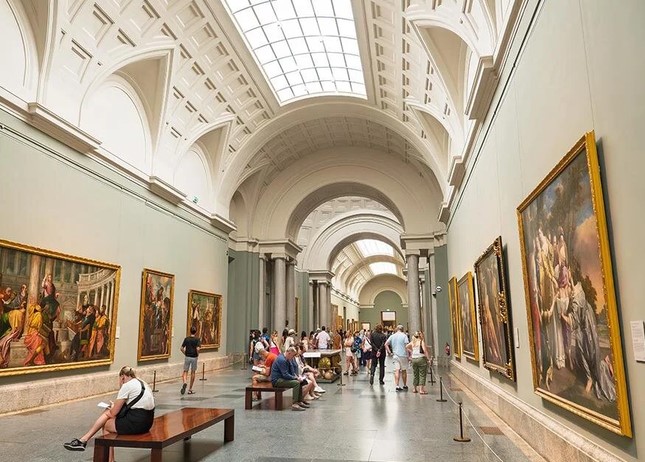
Picture this: You’ve spent months planning your dream trip to Europe. You’ve braved a 90-minute security line under the blistering sun, stepped inside the cavernous halls of the Louvre, and shuffled through a sea of selfie sticks just to catch a tiny, distant glimpse of the Mona Lisa.
Twenty minutes later, your feet are throbbing, your eyes are glazed over, and you realize you have zero emotional connection to anything you just walked past.
Over my ten-plus years of crisscrossing the globe as a full-time traveler, I’ve made every museum mistake in the book. I used to think booking a guide was an unnecessary luxury reserved for wealthy connoisseurs or retirees on bus tours.
I was wrong. Deciding to join city art galleries tours isn’t about having someone read plaque descriptions out loud to you; it’s about unlocking the secret narrative of human history.
Navigating a massive museum like the Prado or the Uffizi without a expert guide is like trying to read a 1,000-page historical novel where someone cut out every third page and shuffled the chapters. A great guided tour provides the binding, the context, and the missing plot twists.
Here is my deep-dive operational guide to choosing, navigating, and maximizing guided gallery tours around the globe.
Why DIY Museum Visits Fail (And How Guided Tours Fix It)
When you walk into a world-famous institution independently, you suffer from what I call “Gallery Fatigue.”
The brain can only process a finite amount of visual stimuli before visual saturation sets in. Without a structured narrative, your brain treats every masterpiece with equal weight, leading to sensory exhaustion within an hour.
[DIY Visit]        → High Noise / Low Context → Rapid Sensory Fatigue
[Guided Tour]      → Curated Narrative Arc    → High Emotional Retention
When you invest in professional city art galleries tours, your experience transforms across three critical pillars:
-
Curated Routing: A seasoned local docent knows the layout intimately. They skip the low-priority wings, dodge seasonal bottlenecks, and guide you directly to pivotal works without wasting physical energy.
-
Contextual Storytelling: Knowing that Michelangelo painted the Sistine Chapel ceiling is basic trivia. Understanding why his relationship with Pope Julius II was toxic—and how that tension is etched into the frescoes—brings the ceiling to life.
-
Timed-Entry Privileges: Most top-tier gallery tours include dedicated skip-the-line operator entry, sparing you hours of standing in queue lines.
The Spectrum of Museum Tours: Finding Your Fit
Not all tours offer the same value proposition. Choosing the wrong format can leave you feeling rushed or over-budget.
| Tour Type | Group Size | Price Point | Best For | Trade-Offs |
| Large-Group Walks | 15–30 people | Low ($25–$45) | Budget Travelers | Harder to hear; rigid pacing; no personalized questions. |
| Semi-Private Groups | 6–8 people | Mid ($65–$120) | Intermediates | Great balance of interactivity, cost, and access. |
| Private Docent Tour | 1–4 people | High ($250–$500+) | Deep Dive | Expensive; requires booking 2–3 months ahead. |
| Official Audio Guides | Solo | Minimal ($5–$10) | Introverts | Self-paced, but lacks dynamic storytelling and live Q&A. |
Small Group vs. Private Docent: My Rule of Thumb
If you are visiting a gallery with fewer than 500 major works (like the Musée de l’Orangerie in Paris), a semi-private group tour works brilliantly.
However, for gargantuan labyrinthine complexes—such as the Vatican Museums or the Metropolitan Museum of Art in New York—a private docent who can customize the route to your specific interests (e.g., focusing strictly on Renaissance iconography or Impressionist brushwork) is worth every single penny.
4 Iconic City Art Galleries Tours Tested and Rated
Having personally completed dozens of organized gallery walks across six continents, four specific city tours consistently stand out for their exceptional curation and docent quality.
1. The Uffizi Gallery (Florence, Italy)
-
Focus: Early to High Renaissance Masterpieces.
-
The Insight: Florence’s Uffizi was originally built as administrative offices (uffizi) for the Medici family. A great guide won’t just show you Botticelli’s The Birth of Venus; they will trace how the Medici used visual art as political propaganda to assert control over the Florentine Republic.
2. The Louvre (Paris, France)
-
Focus: Classical Antiquities, French Romanticism, & Italian Renaissance.
-
The Insight: Spanning over 73,000 square meters, walking every hall here takes miles. Booking targeted city art galleries tours focused on specific wings (such as the Denon Wing for French masterpieces) keeps your total walking distance under two miles while hitting every critical artwork.
3. The Metropolitan Museum of Art (New York City, USA)
-
Focus: Global Art History across 5,000 years.
-
The Insight: The Met can feel overwhelming due to its eclectic breadth. A top-tier tour connects seemingly unrelated exhibits—showing how ancient Egyptian faience techniques directly influenced 19th-century European glassmaking.
4. The Rijksmuseum (Amsterdam, Netherlands)
-
Focus: Dutch Golden Age & Masterworks by Rembrandt and Vermeer.
-
The Insight: Dutch masterworks are packed with hidden symbolism—from peeled lemons signaling earthly vanity to dog breeds representing marital fidelity. Without a docent to decode these visual tropes, you miss half the painting’s intent.
Pro Tips: How to Maximize Your Gallery Tour
-
Book the First Slot of the Day: Secure a 8:30 AM or 9:00 AM tour. Early slots give your group clean sightlines through key galleries before general admission crowds flood the rooms.
-
Check Docent Credentials: Before booking with third-party aggregators, verify that the tour company employs licensed art historians, curators, or local university researchers rather than general city guides.
-
Use Whisper Systems Properly: Most mid-to-large group tours utilize radio earpieces (“whisper sets”). Bring your own comfortable 3.5mm wired earbuds to plug into the receiver—the stock plastic pieces provided by operators get uncomfortable fast.
-
Schedule Rest Days Around Big Museums: Avoid scheduling a 3-hour museum walk on the same day as a walking food tour or an airport transit. Museum legs are real—give your body a break!
Hidden Pitfalls to Avoid
Warning: Beware of “Skip-the-Line” ScamsMany illegitimate operators sell ticket markups labeled as “Guided Tours with Skip-the-Line Privileges” that simply hand you an entry ticket and a printed map at the door without an actual human guide. Always read the fine print under Inclusions to confirm a live, licensed guide is part of your booking.
Additionally, pay close attention to photography policies. Nothing disrupts the flow of a structured art tour faster than participants stopping every thirty seconds to take non-essential snapshots. Take in the artwork with your eyes first; step back for a quick photo only after your guide finishes their commentary.
Final Thoughts & Community Discussion
Art galleries aren’t silent storehouses for dead artifacts; they are vibrant repositories of human passion, political intrigue, heartbreak, and rebellion. Investing in curated city art galleries tours transforms an exhausting tourist obligation into an unforgettable narrative journey.
What about you? Have you ever taken a guided tour that completely changed how you viewed a specific painting or artist? Or do you still prefer exploring galleries solo with a pair of headphones?
Let me know your thoughts and favorite museum experiences in the comments below!
